Education is about helping students to recognize the value of the blank pages in their growth. Guess what, parenting needs blank pages, too!
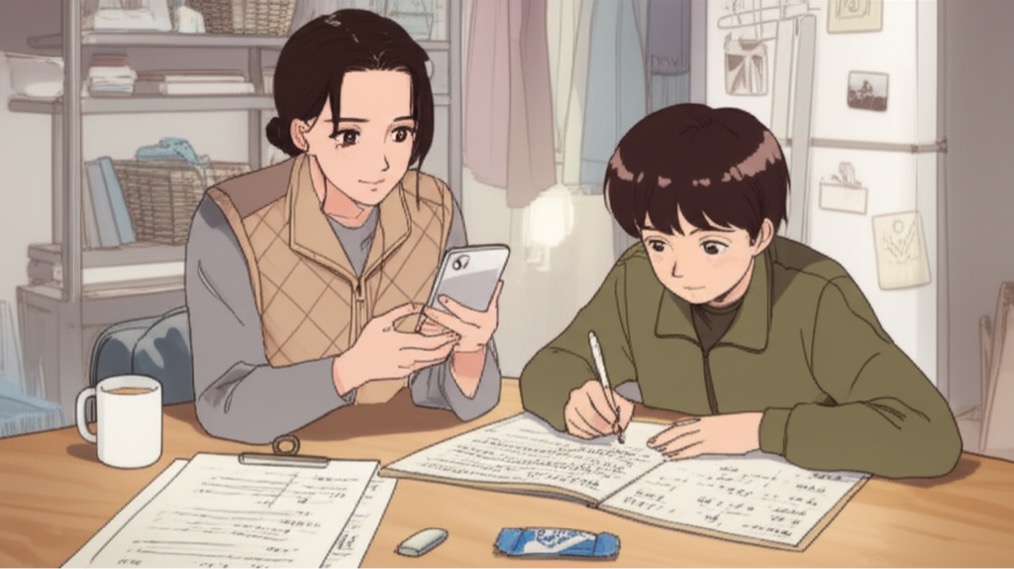
My son Rintaro is studying for his high school entrance exams, so my wife is working with him on math, which he’s not good at. He has terrible handwriting, so his messy numbers get in the way of getting the right answers. Yesterday, my wife said, “This equation is a story, so to speak, leading up to the answer. So, write that story clearly and beautifully so the reader can understand it. You can’t arrive at the answer without telling your own story.” I think you have heard the different kinds of explanations to teach kids the importance of “showing their work” before the answer.
The math teacher used to say, “Show me your work,” at the American middle school where I taught. We taught students the importance of not just writing down the answer, but also “showing the process and explaining it logically.” In fact, even in graduation exams, when the teacher asked students to “verbally explain how to solve it” rather than “solve this equation,” students who didn’t do so well in math but who had practiced the steps a lot were better at explaining logically than students who routinely said, “I already know the answer, why do I have to write down the steps?”
I work with parents. Some are tired of searching for the “right answer” in parenting. Others don’t care about “how” to do it. Some parents are cost-conscious and only want to know “what will happen” if they do it. And others worked hard to develop their own steps to their answers. We would probably just write down the “answer” if the answer column on an answer sheet were very small. What if there were 10 blank pages attached before the answer column? We would not just write “answer” in the small square box on the last page, right? We would use those blank sheets to write steps and thoughts that lead to the answer.
Would you understand the answer if you knew just the answer? Most importantly, would you understand the steps to arrive at the answer just by knowing the answer? Would you really be able to understand the process of getting there? Use blank pages! Don’t copy and paste someone’s steps in those blank pages. It has to be your steps! No matter how many times you ask around and put together someone’s “correct answer,” you won’t arrive at “your answer.” The breadth of parenting lies not in the correct answer column, but in the process column.
In Japan, I hear, “there’s no right answer when it comes to raising children.” It is one of the comforting phrases for parents who are struggling to raise kids. Some start arguing with their own opinions. “But, you know…” “There’s no right answer when it comes to raising children,” but what ideas follow after that statement? Your “but, you know…”
“But, you know, there is ‘my’ answer. And the ‘process’ of getting there is what’s exciting about parenting!” is my idea.
Show the process. That might mean you can get partial credit even if the answer is wrong. I want to raise my children in a way that values partial credit. That’s because I want to teach them to value the process and to give fair, proper evaluations along the way. Whatever the outcome, the story is adventurous, and its ups and downs make it remarkable.
We need to value the way we parent and the process of our growth as parents, and give ourselves fair credit along the way. I think it would be best to say something like, “I’m sure we are doing something together with my kids that has a positive influence on mychild. I’ll give myself partial credit for that!”
There is no right or wrong way to raise children, but partial credit is fun and amazing. Whatever the outcome, the story should be worth reading.
My son, Rintaro. You have been amazing. I hope you continue your adventures and meet amazing people.
I cannot thank our Feelosopher’s Path Community enough for raising him over the last 5 years into a better, stronger, and kinder person. Of course, he is a work in progress. I truly appreciate the guidance and care of all the people in the community who gave to Rintaro. It was a life-changing experience for Rintaro.
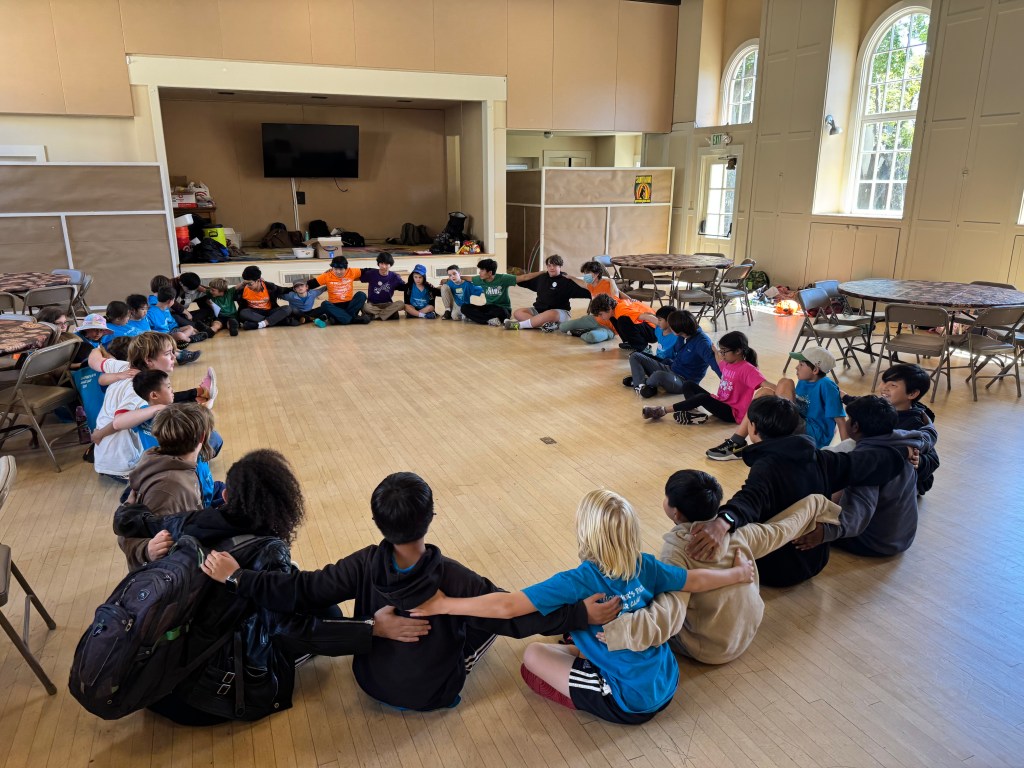
I believe in this approach: “It takes a village to raise a kid.” Although creating a safe community is not easy for parents and kids, and it is a collective effort, it can be a life-saving experience for some families. A couple of years ago, Rintaro lost his peers’ trust because he was irresponsible and immature, and he didn’t keep his promises. His peers gave him a chance to recover their trust. Thank you for working with him so that he knows who he is and whom he can become. His peers’ parents climbed mountains with him and cheered him many times. Community members read his reflections from the adventure and commented on his posts. Thank you so much. I hope he understands how lucky he is.
Rintaro told me that he needed to grow with his peers and go out of his comfort zone with them. He could manage his feelings better because he needed to work with his peers, even though there were many conflicts. He recognized the importance of having friends and going on adventures with his peers. Thanks to the community, he is able to care for others and do things that involve others instead of doing them by himself. He could joke around and have a serious conversation with his peers at the same time. He could share his feelings and thoughts. Rintaro, you are very lucky to have such amazing peers.
Rintaro and I became a family when I was 45, and he was 10. He was near the end of 4th grade. When my parents found out I would have a son, my dad shared his wisdom with me once again. “Don’t choose the path for your kids, because they will blame you if there are obstacles on the path. If they choose the path, they will problem-solve to pass the obstacles. So, just support whatever they want to do. Did I choose the path for you? ” I shook my head.
But I have to tell you that my dad couldn’t be, because he wasn’t around when I was growing up. That is another story. Anyway, I told my dad the path Rintaro wanted to take. “Rintato wants to be homeless when he grows up.”
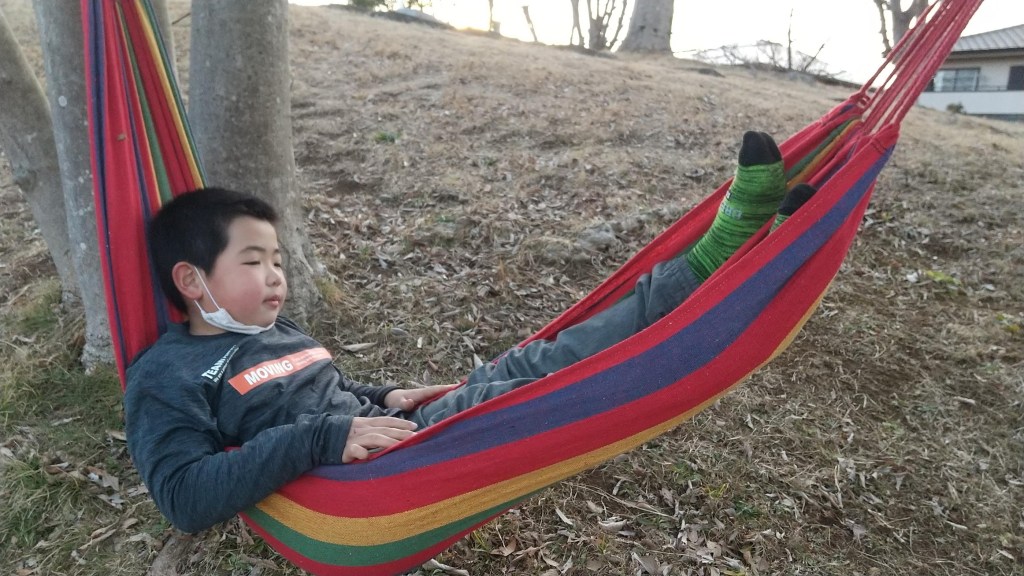
My dad was laughing…But I was not. Rintaro found a hammock in my house, so I told him he could use it. I also told him there was a park in front of my house and pointed out two trees he could use. Did I do too much for him already to support what he wants to be? How do you raise a kid who does not give a frappe about his future?
He gave up on himself. He did not give himself a chance to be better. He did not know he could be amazing. “You can be amazing if you want to be,” I told him.
However, ultimately, this has to come from within him, not from me. “I can be amazing if I want to be.”
I told my wife.“For the next 3 years, Rintaro and I can do things together. But, he probably does not want to do things with his parents after he becomes a middle school student. He would prefer to do it on his own or with his peers.”
Actually, that moment came earlier than I expected. When we went to Hokkaido for the summer. He wanted to travel on his own. He was a 7th grader. I asked him, “How about the family time and a family photo?”
He replied, “What about it?” He stayed at the youth hostels he chose, took the train line he had chosen, and visited the places he had chosen. Only the random challenge from me was to make dinner and offer it at the hostel. We were traveling separately for about 1 week. Because he was traveling alone, he could meet amazing people. He had a blast! Sometimes, we parents are the obstacles to kids having amazing opportunities. When he became an 8th grader, he told us he wanted to try the Shikoku Pilgrimage during the summer break, which is 4 weeks long.
The Shikoku 88 Temple Pilgrimage is one of the few circular-shaped pilgrimages in the world. It includes 88 “official” temples and numerous other sacred sites where Kūkai (Kōbō Daishi) is believed to have trained or spent time during the 9th Century. If walked, the entire route is about 1,200 kilometers long, which allows one to experience the abundant natural surroundings of Shikoku and presents visitors with numerous opportunities to mix with local people. https://shikoku-tourism.com/en/shikoku-henro/shikoku-henro
I think he was a wanderlust. He wanted to go on the Shikoku Pilgrimage for over 4 weeks. He wanted to sleep in the tent beside the road. He wants to walk miles and miles. The only concern for us was that he had to be careful about heat stroke. Fortunately, he met amazing people who took such good care of him. When he came home, he told me that he wanted to send thank-you cards. Taniguchi san, who took care of him, set up a Facebook group page to help out with Rintaro’s Pilgrimage. https://www.facebook.com/groups/1193549688451345
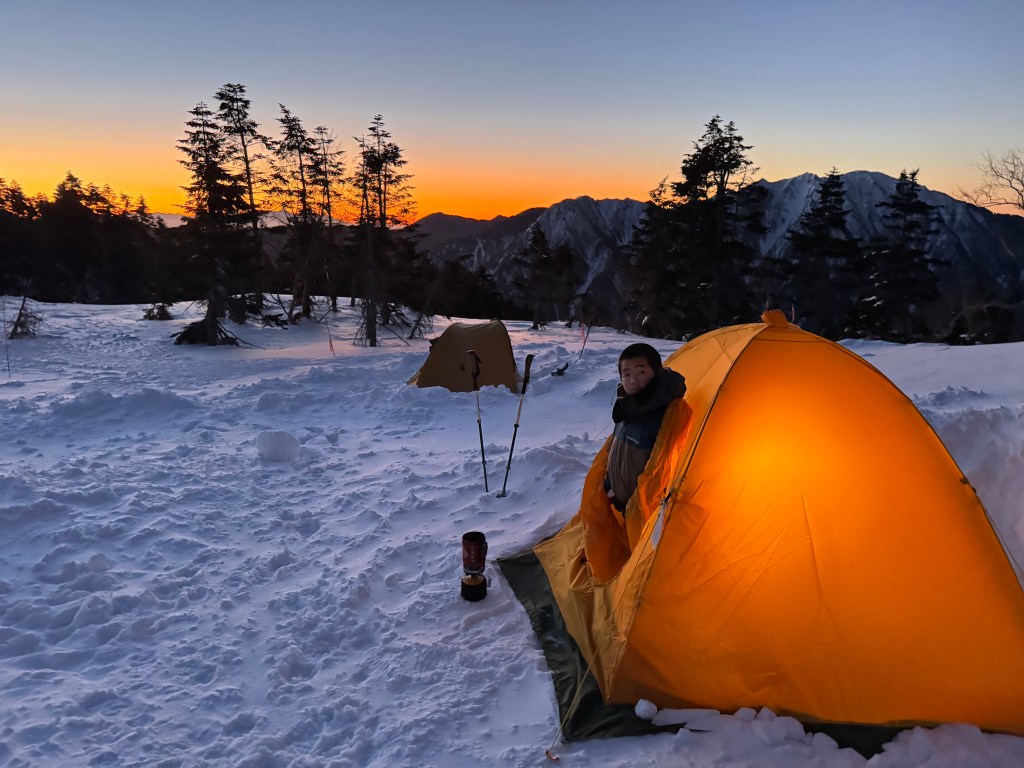
Later, he went back to complete the Shikoku Pilgrimage during his winter vacation. He has completed about 75% of the route so far. I am sure that he wants to complete it this year. He did not need a hammock. He needed empowering experiences, climbing mountains, and his solo adventure.
Now, what he wants to do when he grows up changes every time he goes on a new adventure. He became hopeful from hopeless.
“To become experience.”I am not looking for things he likes or can do. That is boring. He does not have to prove it. There is no effort involved. I want to work with him
on things that involve preparation. He needs to work towards so that he will be a “work in progress.”
“I am bad at it.” Those are the phrases I want.
He is beginning to like Running: he did not like running in front of people, so he did not want to participate in marathon events. But he started running every morning and evening for about 4 miles; he has a greater passion for running.
Climbing with self-belaying: He was afraid of heights, but he overcame his fear of heights. He enjoys climbing and needs 3 points of support or self-belaying.
Lately, many parents have wanted to discuss their parenting styles with me. “Hands off or Hands on?” “Too much involvement or too little involvement? “Am I doing too much for kids?” That totally depends on the kids and their different stages. So, you don’t need to listen to what the popular approach is. See the kids in front of you and challenge them. To challenge them, you need to know what a challenge looks like and what it means.
I am more of a “Let go of your kid’s hand” approach. My wife and I are taking an “Educational Risks” so that Rintaro can grow from the experiences he needs. Guiding a son to have a healthy adolescent stage. What is the healthy adolescent stage? If kids are talking about their feelings and thoughts to people who are not parents while traveling or going on an adventure during adolescence, I believe kids are physically, socially, and emotionally healthy.
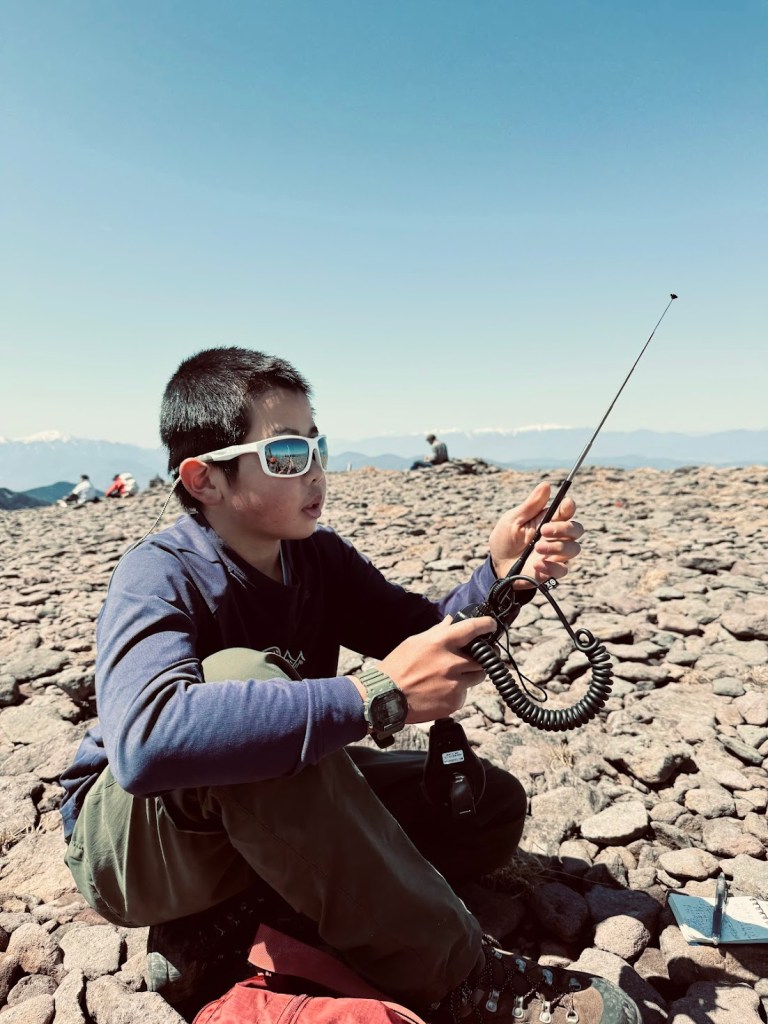
Rintaro and I have climbed many mountains over the last 5 years with people from our Feelosopher’s Path community. Also, he has been taking an adventure on his own.
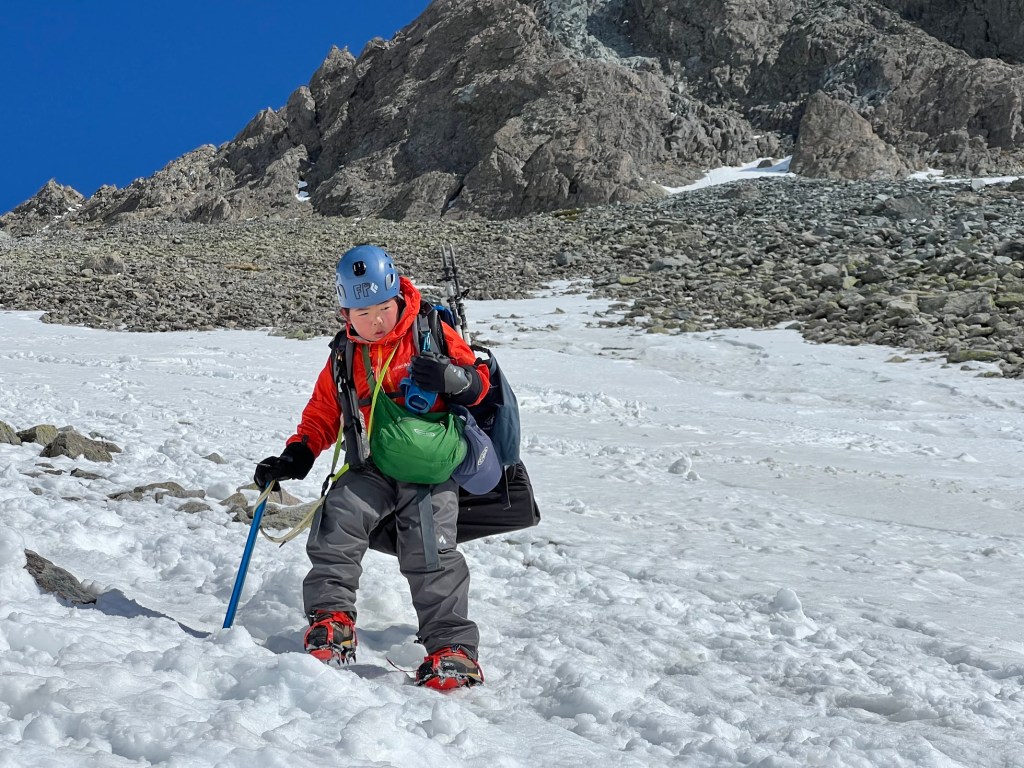
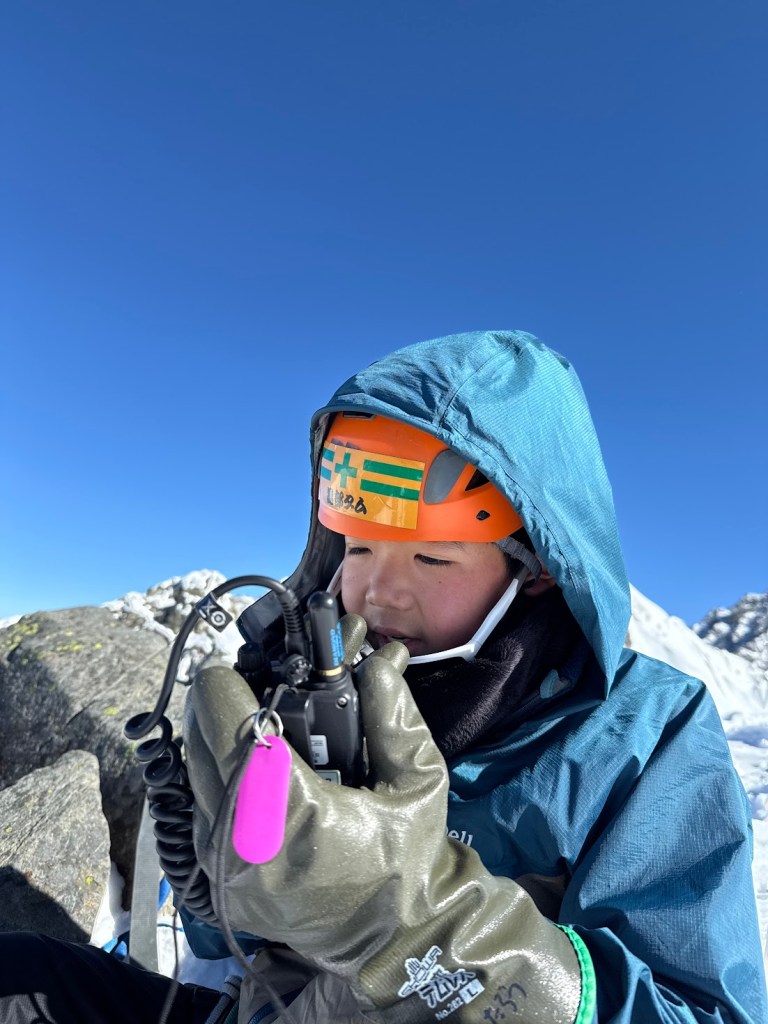
I asked him to climb Mt. Nishihodakadake in the Japanese Alps last February. He said, “I am not sure.” He usually says, “Yes, let’s go!”He was a bit scared of climbing during winter. “Well, you are going, so get ready. We leave tonight.”
I told him, “If you start to choose the opportunity, your comfort zone will get smaller.” It is because kids tend to choose things they enjoy, find easy, or are capable of.
Once we are in the Nishihodaka lodge, he said, “I think I will set my goal to reach the Doppo peak.” I said, “Why Doppyo?” Rintaro said, “It’s because many of them said they go to Doppyo during the winter. I watched it on YouTube.” I told him,” Never set a goal based on someone’s goal. They have different mindsets and skill sets. That is their goals and not ours.” I told Rintaro, “We will aim for Pyramid’s peak.” I knew that Rintaro could go much farther and reach the Pyramid’s peak. However, he did not think he could do it yet. He should be scared of the challenge because he was about to go out of his comfort zone.
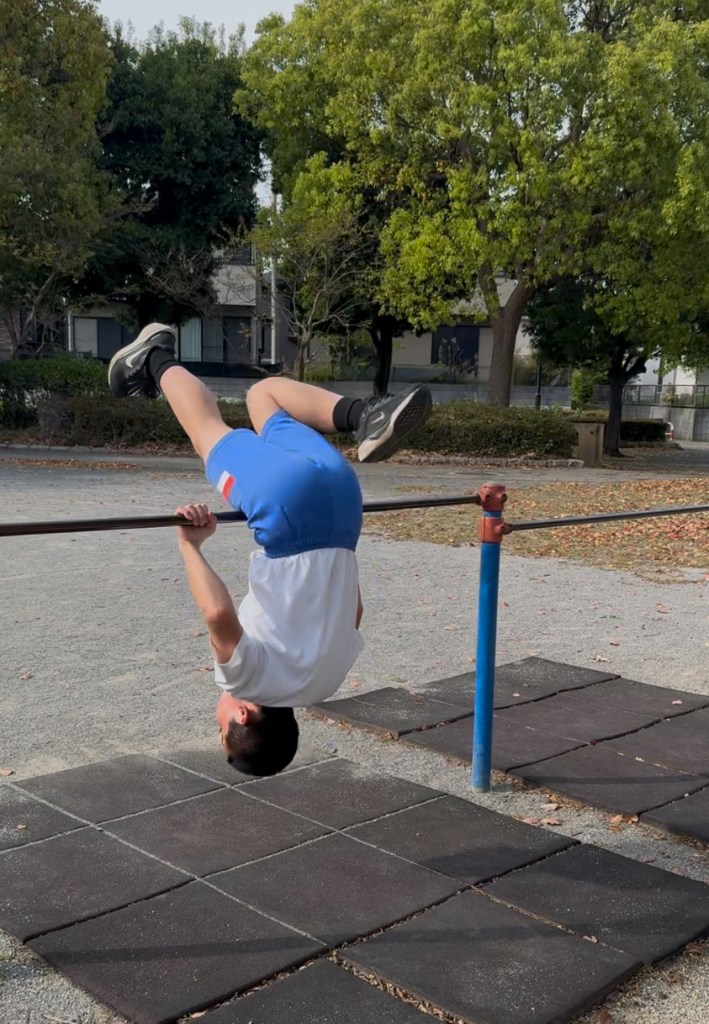
He made a joke about it, “It took a series of mountain climbs to do a back hip circle.”
Now he knows from his experience what “Do it as if your life depended on it” means.
I have heard this somewhere. The relationship between a mother and a baby develops during pregnancy, and when a baby needs 24-hour undivided attention.
On the other hand, dads need to make an effort consciously to develop a relationship with their baby. I am sure that this applies to only a few dads, but I felt mine was in this case. My son did not call me “Papa” until 3 years old. Do you have the same experience with your kid? Yosuke, my 3-year-old son, is finally starting to approve of me as a dad.
My son does not call me “Dad” or “Papa.”
Yosuke calls me “Tan” or “Tanko.”
It is just a sound. no meaning.
Since my daughter called me “Papa,” I assumed that my son would call me the same, but not. He can talk now. He could pronounce the “PA” sound. But he does not call me “Papa.” He shakes his head every time I ask him to say “papa.”
Here is the story I want to share.
Erin, co-founder of Feelosopher’s Path, and I run a summer camp with amazing staff. I take some Japanese students to the San Fransico Bay Area for 3 weeks.
Yosuke was 18 months old. It was tough coming home after the summer camp in 2024. He cried every time he did not see my wife. For example, we were in a living room together, and Hiromi got up to get something from the kitchen, and he cried. He wanted to escape from my arms while he was crying. That went for about 2 months.
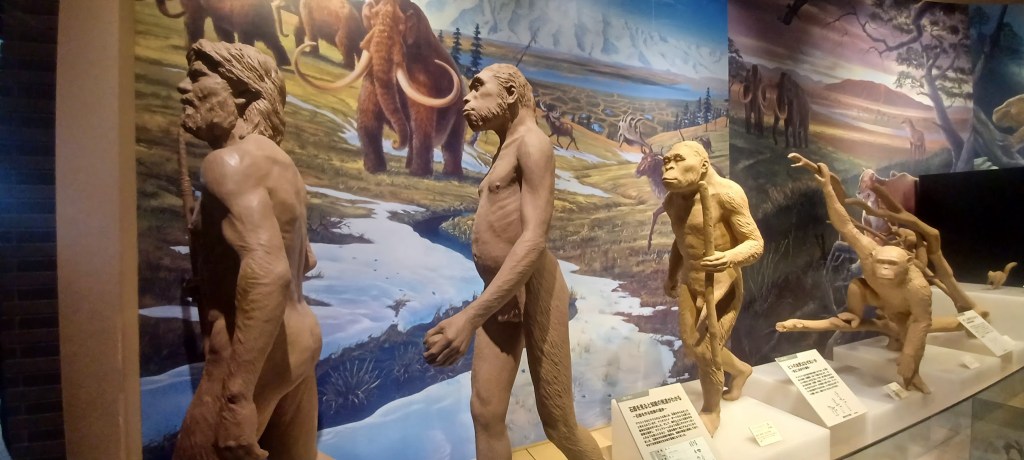
My wife sent me a clip one day when they visited the Ibaraki Nature Museum.
Yosuke was standing in front of the human evolution display. He pointed at Neanderthal and said, “Tanko!” He was not pointing at a man in front of the line.
I always thought that he did not want to call me “Papa” because he did not approve of me as a dad. He thought that “Should I develop a relationship with this dude? He can be gone for a long time.” The only adult he could rely on was his mother. I don’t blame him.
My son Yosuke and I sleep in the same futon, and we chat, and I usually fall asleep first. There was a week he cried almost every night. “I wanted to see you so bad!” He could say that because he can speak and share his feelings now.
He said he dreamed that I was gone for a long time and he was alone.
Maybe that happened. It was not a dream. I was gone for a long time, and it must have scared you.
Guess what?
For some reason, Yosuke started calling me “Papa” lately. Of course, he calls me “Tan” but I hear more “Papa”
So, I told my wife,
“I think the reason Yosuke started to call me “papa” is because Yosuke shared how he was feeling at night in a futon when I was gone for the summer!”
My wife said,
“I think you are interpreting it in the way you like.”
Anyway, I think this is true that
The best gift for the kids is not “presents” but “being present.” They want our undivided attention.
Steve, my boss and amazing educator, often mentioned how important it is to send kids to bed early and also be with them for a while, although they are in their teens at the parental meeting, because they may share their feelings or ask you for some advice.
I will miss being called “Tan” or “Tanko.”
I am looking forward to spending more time with Yosuke.
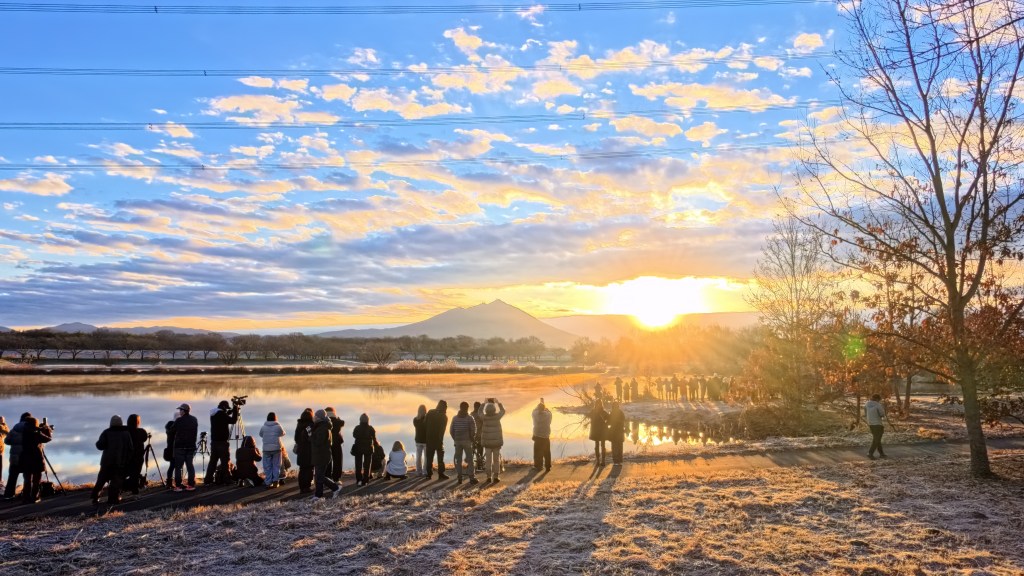
A beautiful sunrise on New Year from Mt. Tsukuba, Ibaraki, Japan Jan.1 2026
Hello, my name is Hiroshi, and I have been in education for more than twenty years. Also, I have been married for almost 5 years, and I have an amazing wife and 3 kids. So, I have been an educator longer than I have been a dad. I would like to share our experience on how amazing it is to raise kids in Japan, and also our epic adventure in Japan. Brace for impact!
Last summer, one of our camp staff asked us, “Can we learn valuable lessons from our adventures in our daily lives? Yes or No?”
My answer was “No, you need to go on an adventure to learn those valuable lessons.” But, I am not quite sure about my answer now because my kids come home with a lot of stories every day, and it means a lot to them. I don’t think my answer applies to my kids. They have the power to turn anything into their epic adventure. Anyway, I think I need to rethink my answer with my kids.
What makes an adventure?
What are the elements you value when you are on adventure?
A couple of years ago, I was on a road trip with my students. We camped at Kings Canyon National Park and took an overnight hike to Twin Lake. We could not believe that there would be lakes on top of the mountain. We relied on the signpost on the trail to get to Twin Lake. We stopped at the tiny waterfall to purify water to make our drinking water. We tried dehydrated food we had never tried, including pudding. We needed to walk fast where the lightning hit many trees. We need to be careful about the time when we start to walk on the trail so that we don’t run into bears. Twin Lakes were just for us. An amazing view was waiting for us. I truly enjoyed the hike. On the way home, we drove to Yosemite and saw an amazing waterfall, El Capitan, a very famous place.
When we came home, we talked a lot about the hike to Twin Lakes, and not so much about the time in Yosemite. I think it is because we were just tourists in Yosemite, not the explorers in Kings Canyon. We bought souvenirs from the gift shop in Yosemite, instead of having the adventure stories.
So, what is important for me when I go on an adventure?
I come home with a bunch of stories. Instead of things to have or give, I believe “stories” are the best souvenir from the adventure. In addition, when we talk about the stories from the adventure, we celebrate who we were.
These are some important ingredients for my adventure.
① Embrace the unexpected. I love taking back roads and finding beautiful places to rest, or stopping at local shops to chat with a store person. I see flyers for local events in local shops, and those are the ones that sometimes give me unexpected experiences.
② Random conversations with random people. I enjoy talking with people when I travel. For me, those are the people who give me “food for thought,” which enriches my experience during the adventure. You can be whoever you want. Try “Act as if” Act as if you are the most friendly person they will meet that day!
③ Bring “YOUR” adventure. Immerse. Be in a moment. Be present. How do you capture the moment? Journaling? drawing pictures?… My son was making a rubber stamp “Hanko” when he was inspired by the place during the trip, and negotiated to leave it so that some people may find it fun at the sightseeing places, train stations, or ferry terminals, where you find commemorative stamps.
④ Try new things. It does not matter whether small or big. Do you have moments like this? You feel you don’t need to even try because you know what’s going to happen, although you have not tried yet. When I have those feelings and thoughts, I want to make sure that I try.
I want to share with my family what’s important to me during an adventure that I cannot share with them at home. And, I am sure that I will add more to my important elements when I go adventure with my family.




 今瀬博の教育と子育てと冒険話・Words of wisdom: Education, Parenting and Adventure